_edite.png)
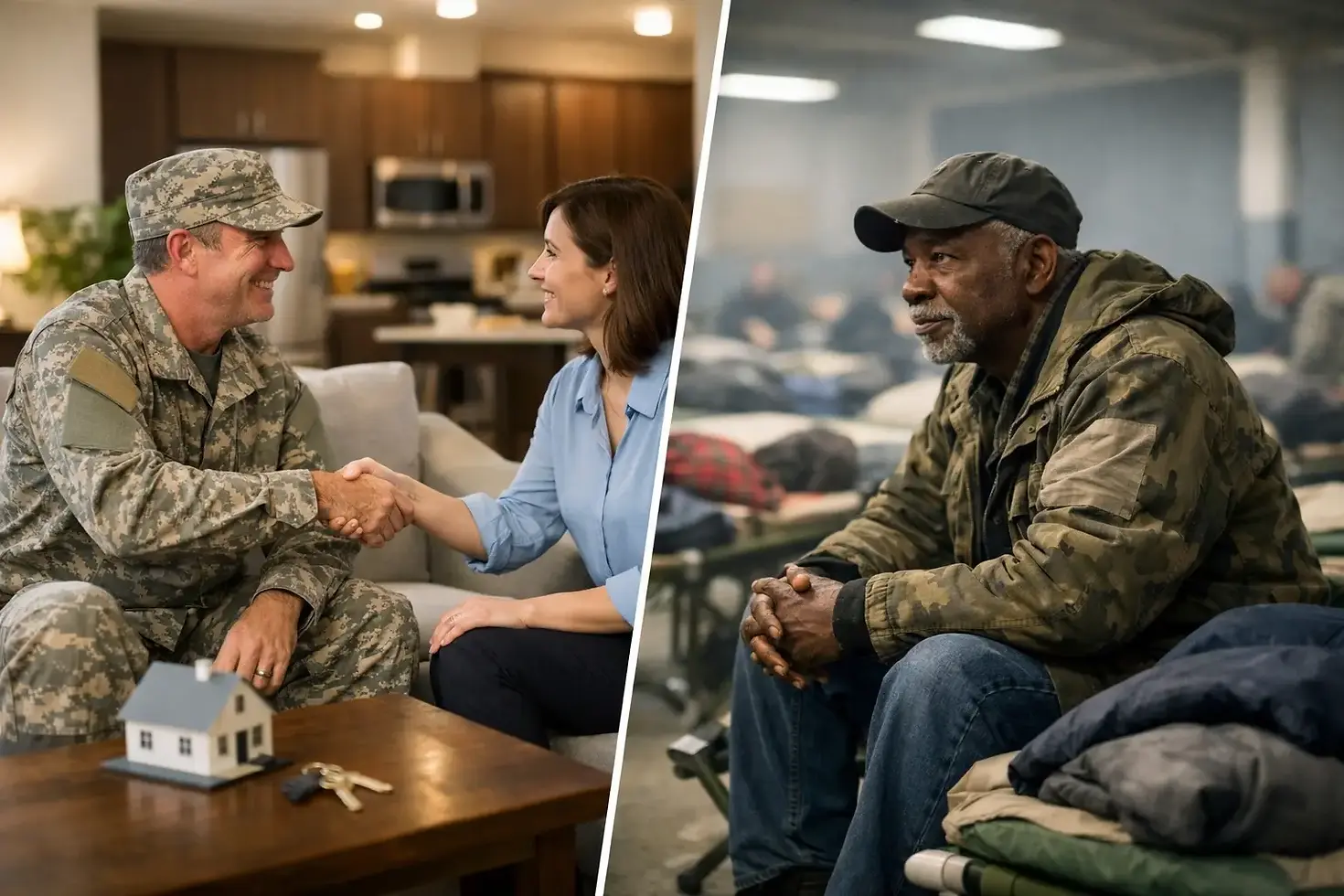
Housing First Versus Shelters for Veterans
A veteran should not have to choose between a shelter bed for one night and sleeping in a car the next. The conversation around housing first versus shelters is not about dismissing emergency help. It is about recognizing that a safe place to live is the starting point for rebuilding a life after homelessness - especially for men and women who served our country.
Shelters can keep someone alive during a crisis. Stable housing can help someone move beyond the crisis. That difference matters when a veteran is trying to hold a job, manage a medical condition, reconnect with family, attend appointments, or simply get a full night of rest without fear.
Housing First Versus Shelters: The Core Difference
Emergency shelters are designed for immediate safety. They may provide a bed, meals, showers, and a place out of dangerous weather. When someone has nowhere else to go, that support can be lifesaving. Communities need shelters, and many dedicated people work hard every day to make them safer and more welcoming.
But shelter is not the same as home. Many shelters have time limits, shared sleeping areas, strict schedules, limited privacy, and rules that can make it difficult to keep belongings, care for pets, work late shifts, or stay connected with family. For a veteran carrying the weight of trauma, chronic pain, disability, or the uncertainty of civilian transition, those conditions can make it harder to regain stability.
Housing First begins with a different premise: get a person into safe, stable housing as quickly as possible, then connect them with the services they choose and need. It does not require a person to solve every challenge before receiving housing. A veteran does not need to prove perfect sobriety, steady employment, or complete recovery before being considered worthy of a secure place to sleep.
That is not lowering the standard. It is putting the foundation in place first.
Why Stable Housing Changes What Is Possible
Homelessness creates problems that are difficult to solve from a shelter cot, a vehicle, or a camp. A mailing address can affect job applications and benefit paperwork. A refrigerator makes it easier to store food and medication. A locked door creates privacy for rest, counseling calls, and the simple human need to feel safe.
For veterans, housing stability can also support the practical work of reintegration. It is easier to keep a doctor’s appointment when transportation and sleep are more predictable. It is easier to pursue VA benefits, workforce training, or employment when every day is not consumed by finding somewhere to stay. It is easier to rebuild trust with loved ones when there is a dependable place to welcome them.
Housing First does not claim that a roof alone heals every wound. Veterans may still need health care, mental health counseling, substance-use treatment, disability support, legal aid, job placement, and community. The difference is that these supports are more effective when a person has a stable base.
A home gives a veteran room to breathe, plan, and take the next step.
Where Shelters Still Matter
A fair discussion of housing first versus shelters must acknowledge that shelters remain essential. A veteran escaping violence, losing housing suddenly, or stranded after a crisis may need immediate protection that same night. In a severe storm or dangerous heat, a shelter can be the difference between safety and tragedy.
Shelters can also serve as a point of connection. Staff may help someone replace identification, apply for benefits, access meals, or learn about available housing programs. In communities with limited housing inventory, they may be the only immediate option.
The problem comes when emergency shelter becomes the long-term plan. A system built around temporary beds can manage the visible emergency without resolving the underlying lack of housing. Veterans may cycle from shelter to street, from a friend’s couch to a motel, and back again. Each move makes employment, treatment, and recovery harder to sustain.
The strongest local response does both: it maintains emergency shelter for urgent needs while creating real paths into stable housing. One provides a lifeline tonight. The other creates a chance at a different tomorrow.
The Reality for Veterans in East Texas
Housing challenges do not look the same in every community. In East Texas, veterans may face long travel distances, limited public transportation, fewer available rentals, rising costs, and scarce services outside larger cities. A veteran may have a job opportunity but no affordable unit nearby. Another may have medical appointments in town but no reliable way to stay close enough to reach them.
That is why practical housing options matter. They must fit real local conditions, not just sound good on paper. An RV that is safe, refurbished, and placed responsibly can offer a private, livable space much faster than waiting for a traditional rental unit to open up. It can be a bridge for a veteran who needs stability now, whether the next step is permanent housing, renewed employment, or reconnecting with family.
An RV is not a one-size-fits-all answer, and it should never be treated as an excuse to ignore the need for more affordable housing. Safe placement, utilities, maintenance, accessibility, and local regulations all matter. Some veterans need fully accessible homes, intensive care, or housing close to specialized services. But for others, a properly prepared RV can be a dignified and immediate housing solution where few alternatives exist.
That kind of flexibility is especially valuable in rural and underserved areas.
Dignity Is Not a Reward for Getting Everything Right
Too often, people discuss homelessness as if housing must be earned after every other problem is resolved. That approach misunderstands the pressure of survival. It asks someone to interview well, stay healthy, keep appointments, manage trauma, and make perfect decisions while they are exhausted and unsure where they will sleep.
Veterans have already answered a call larger than themselves. When they return home and face housing instability, our response should carry moral clarity. They deserve safety, privacy, and the opportunity to regain their footing.
Housing First recognizes dignity as a starting point. It says a veteran is not defined by a difficult season, a medical diagnosis, a missed opportunity, or the circumstances that led to homelessness. The goal is not merely to place someone somewhere for the night. The goal is to help create conditions where they can live with greater independence and hope.
What Direct Community Support Can Do
Large systems and public programs play an important role, but local action can move quickly. A donated RV sitting unused in a driveway can become a housing opportunity. A repair shop can contribute labor. A business can provide materials or sponsor repairs. Neighbors can volunteer time, furnish a unit, or give funds that cover inspections, tires, appliances, propane, and essential repairs.
This is the hands-on work that turns concern into a place a veteran can call home. At RVs 4 Heroes, donated and purchased RVs are refurbished into safe, livable housing for veterans because visible, practical action matters.
For supporters, the question is not only whether homelessness is a serious problem. It is whether we are willing to help build solutions that give veterans a stable place to begin again. Financial gifts help cover the costs that come after an RV is donated. Volunteers make repairs and prepare units. Business partners can help ensure that each home is safe, functional, and ready for its next chapter.
A Better Question Than Shelter or Housing
The choice should not be framed as compassion for shelters or compassion for housing. Communities need emergency shelter when danger is immediate. But we should measure success by how many veterans move from crisis into stable, safe living situations - not by how long they remain in temporary beds.
When a veteran has a door that locks, a place for belongings, and space to rest, the next steps become more achievable. A job application is no longer written while worrying about nightfall. A medical visit is no longer one more hurdle in a day spent searching for safety. A future begins to feel possible again.
Our veterans deserve better than survival from one night to the next. They deserve a real foundation, and every donated RV, repaired appliance, volunteer hour, and dollar given can help build it.


Comments